
Most prepping activities revolve around the home. Food, water, equipment and supplies are stored there. Even a bugout bag is usually kept in the home, to grab when you are ready to go out the door. But suppose that you 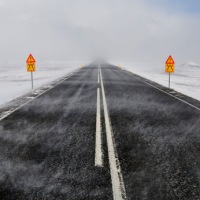 are on the road, or at work, when some disaster or emergency situation strikes. It will be very useful to have supplies in your vehicle as well. And I suggest that your prepping activities for any vehicle would fall into one of two categories: general and vehicle specific.
The general prepping supplies that you keep in a vehicle would be similar to what you store in your house — food, water, first aid, etc. — but in reduced quantities. A car should have a small first aid kit, some bottled water, and perhaps a meal or two’s worth of ready-to-eat food. For the bottled water, I’d prefer the half-liter bottles over gallon bottles. They are just more convenient for short-term use.
Car-stored food is problematic, since temperatures in a vehicle can range from below freezing to well above safe storage temperatures for most packaged or canned foods. Butch has already discussed the car temperature conundrum here. I’ll add that I am still seeking the best ready-to-eat foods that will store well, without regard to temperature. No one recommends storing any type of food at “car sitting in the sun all day” temperature levels. My current vehicle (Jeep Compass) is often parked outside, for the sake of convenience, even though I can garage it when necessary.
A car first aid kit should have plenty of gauze, some triangular bandages, first aid tape, a first aid book, and an EMT-type scissors. Ideally, the car first aid kit should mirror your larger home first aid kit, with as many of the same items as will fit. Here’s an overview of the items in my home kit.
Certain few pieces of equipment are particularly relevant for a vehicle prepping kit: flashlights, blankets, rain jacket with hood (or a rain poncho), folding knife (perhaps the Swiss Army type would be best). Some duct tape and paracord may also come in handy.
But in addition, you’ll need a few things that are vehicle specific. For navigation, I have a vehicle GPS system (and apparently my smart phone can be used to similar purpose). But a few paper maps are a good idea; they never run out of battery power or have trouble getting satellite reception. An old-school compass, small ruler, paper and pen are also useful for navigation.
The repair equipment that you keep in your car depends a great deal on your knowledge and skills in fixing your vehicle. My skills are very limited, so I’ll keep some extra coolant for the radiator, a can of Fix-a-Flat, jumper cables, and the tire-changing kit that came with the vehicle. Road safety equipment is also a good idea. Road flares are still useful, but newer car safety kits use flashing LED lights instead. Commercial car kits are available with a wide range of useful items, but you might want to put together your own kit.
Lastly, if you live where the winters include snow and ice, you might need a few more items: snow brush, ice scraper, and perhaps even a small folding shovel. In some New England localities, people still keep snow chains to put on their tires when road conditions are at their worst. Fortunately, my locality gets little snow and it does not stay on the ground long.
- Thoreau

Excellent advice about equipment and other durables (I am especially fond of old school paper maps), but there is one supply item that seems to have slipped your notice: fuel.
It is our family’s standard that all vehicles always have at least a half-tank of gas at all times. When we are on the way home from anywhere, if the gauge shows under half, we stop and fill up. That way each car has at least about 100 miles of range at the drop of a hat.
I would hate to have a disaster brew up, throw the go-bags into the car, and run out of gas on the way to the bug-out location.