If you are growing food for survival, you need to consider the possibility 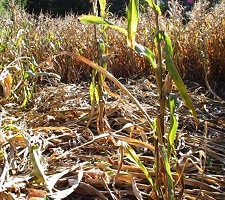 that a crop will fail. If you plan to grow wheat or corn or potato or some other staple food, you cannot assume that you will always have an ample harvest. Even experienced commercial farmers have crop failures or sub-par harvests from time to time. This post is about avoiding and preparing for that eventuality, as much as possible.
There are many reasons for a crop failure or a low yield at harvest: drought, storm damage, excess rain, high wind, pests, plant diseases and more. To some extent, you can take steps to avoid or minimize damage from these sources. But eventually you will encounter a problem harvest or crop failure.
Avoiding drought? You are probably thinking that irrigation solves that problem. Not necessarily. An extended drought can lower the water table. If you are depending on a well for drinking water, you might not be able to water your crops also. There are other approaches to minimizing damage from drought. Plan ahead, so that you grow more food than you need, and store the excess.
Another good practice is to plant crops in stages. For a backyard garden or 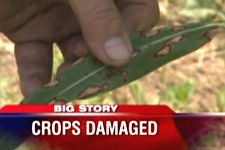 mini-farm, don’t plant an entire crop at the same time. Then, if a crop is harmed by drought or pests or a storm or excess rain, the whole crop will not be affected. Some of the crop will be close enough to maturity to harvest. Some of the crop will not have emerged yet after seeding. Some of the crop might be young enough or mature enough to withstand or recover from the damage. Staggering your planting and harvest will decrease overall yield as compared to planting at the ideal time of year, but it also helps avoid damage to the crop.
If you are growing grains or tubers for a staple food, you will also be better off planting a range of different staples. Don’t plant all wheat, or all potato. Choose several different grains and several different tubers to plant. The benefits to this practice are many. You will have a greater variety of food. If one crops is susceptible to a particular pest or plant disease, chances are that another type of crop will not be. For example, wheat stem rust can devastate a crop, but rye or rice will probably not be susceptible. If one crop is harmed by drought, another may be more resistant. For example, rice and maize (corn) require much more rainfall than amaranth. If one crop is harmed by excess rain, another may benefit. Rice can survive and grow even partially submerged in water; other crops will be destroyed by that much water.

There are usually varieties of any crop that are more resistant to any particular problem: drought, particular pests, particular diseases. Careful selection of plant variety is helpful.
Companion planting refers to planting two or more types of crops in the same field, during the same growing season. This approach can help in a number of ways. One plant may be more resistant to a particular type of damage than the other. One crop can help another to grow. For example, pole beans planted with corn will add nitrogen to the soil. At the same time the corn stalks provide a pole for the beans to grow.
A companion plant can also help in resisting pests. A crop pest likes nothing better than a field filled with its one preferred type of crop. Planting two crops together, and planting more smaller plots with a wide variety of different plants makes the field less attractive to pests, and keeps them from increasing to overwhelm a crop.
Another method is to release good bugs into a field. Lady bugs, lace wings,  and many other beneficial insects can be purchased online and released in a field. Certain types of plants will also attract beneficial bugs to your field. Planting a border around a field with certain types of flowers will attract good bugs to the field. See this article: Flowes for Borders.
Plant disease damage can be minimized by keeping the soil healthy. You should periodically add organic matter to the soil, either in the form of compost or by growing a “green manure” crop, and then turning it into the soil. You can also add micronutrients to the soil by means of seaweed or seaweed extract available at gardening supply stores.
Finally, you can make your crops ever more resistant to pests, disease, and weather damage by saving your own seed. Select the most successful plants of any variety, and regrow those seeds the next time you plant. As you continue this process over time, you will be creating a “landrace” of that crop, i.e. a version of a cultivar that is adapted to the microclimate of one particular area of land. This type of crop is better suited to your particular fields than a commercial variety that is grown for seed in some other region of the country (or world).
- Thoreau