
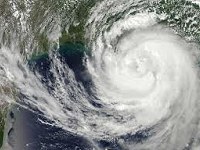
 There’s nothing like a big storm like Hurricane Isaac to get even the laziest Preppers to pop up and rethink their emergency plans and supplies. For me, whenever there’s a big natural disaster I spend just about equal amounts of time glued to the TV watching the weather channel, running around the house inventorying my supplies, and on the internet ordering extra stuff.
While many may laugh at my behavior there truly is a lot you can learn from watching what happens to communities that are hit by different types of storms, especially if you pay attention to the aftermath. I know lots of folks who watch the news coverage up until the storm hits, but who stop watching once the storm has passed. When looking at storms from a Prepping point of view you need to consider both what it takes to get through the storm itself unscathed as well as how to survive comfortably and with a high degree of self sufficiency after the storm has passed.
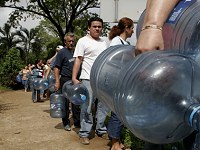 It’s one thing to have a solidly built house that’s all boarded up and makes it through a hurricane with minimal structural damage. It’s quite another to live through the next couple of weeks when city water may be contaminated or just plain turned off altogether. When power is out for weeks, stores are empty or simply closed, and public emergency services like police and fire are stretched to capacity.
We talk about situations like this a lot here at Prep-Blog but Hurricane Isaac really got me thinking about water storage and purification. With the level of flooding the cities were hit with and the level of contamination brought in by these filthy waters I can only imagine that it will be some time before standard city water is online and reliable. In a time like this, even if your own house has not been flooded, it’s risky to trust any water coming out of the tap. Likewise any water source you may have ordinarily relied on (like a pond, river, or stream near your house) may be now severely contaminated. Massive flooding brings up all kinds of dangerous chemicals and other contaminants.
In a situation like this you need to have both a good amount of stored bottled water as well as a robust and reliable water filtration system. 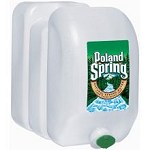 For bottled water I like those 2.5 gallon square plastic water bottles with the built in spigots. I find them easy to store, easy to move around with their built in handles, and convenient to use with their spigots. A couple of cases of 16oz. bottles of water are nice to have around as well. Everyone should plan on having at least a few days worth of safe, fresh bottled water. For a family of four this means thirty gallons or so. Exactly how much water per person per day should be stored has been a hot topic of debate for years but I generally think two or more gallons each is about right for drinking and bathing. Thoreau wrote a great piece on this a while back that you can find here.
Another very convenient and inexpensive way to store safe fresh drinking water at home is to install a reverse osmosis water filter, which is common in many homes. These systems will provide you with plenty of pure, “bottled water quality” drinking water for day-to-day use. Ordinarily they come with a storage tank that fits under the sink and holds about three gallons. I recommend replacing the small storage tank with a large capacity tank that you can fit into a closet or even in the garage. Tanks that hold 100 or more gallons that are commonly used in RVs are great for this. Now that’s a lot of water to have on hand for an emergency and as it’s constantly being rotated so there’s no need to worry about freshness (and yes, bottled water does lose quality after time).
Finally, no matter how much water you have stored it’s still a great idea to have a good water filtration system. I’ve tried out several different products including the LifeSaver water bottle, which I really like, but feel it’s time for a larger system that is more robust and can handle a 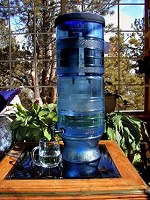 larger amount of water. For this, I’ve pretty much settled on filters by Berkey Water Systems. I find their designs to be simple and classic and am very impressed with the amount of pathogens and dangerous chemicals they remove through their gravity fed designs. I also like the fact that the purification elements they use to do the actual filtering are re-usable after a simple scrubbing and don’t have to be thrown away. After all, if things get really bad there may not be a way to get new filters or replacement parts ordered or delivered…
So when you get a chance take a look back at the news on how things are going in the aftermath of Hurricane Isaac and put yourself in the shoes of those still stuck in New Orleans or who are just now returning to their homes. What would you need to make it through the next couple of weeks without having to rely on others? Now maybe you make a list of where your own supplies are lacking and start filling in those blanks.
~Butch

If you’re on municipal water and sewer you will also need access to water for other needs, such as toilet flushing. Make sure you have access to non potable water as well in order to use your good water for drinking only