
There are two types of supplies that one might store in preparation for short- or long-term disasters: consumables and non-consumables. The problem with storing food and water, is that you will probably use up your stored supplies within a relatively short period of time. By comparison, if you store seeds and gardening equipment, you can reuse the equipment, and save the seeds from one crop for the next. So while I have stored food and water, I consider supplies such as water purification equipment to be more important; it can be used again and again.
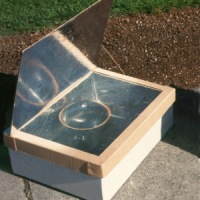 This brings us to the usefulness of the solar oven. If power is out for an extended period of time, you could always cook food over a grill — until you run out of charcoal. You could gather wood, and cook over a wood fire. But over time, gathering wood becomes time consuming and arduous. A solar oven is a good additional option. It needs no fuel, and it cooks during any sunny day. It is not a perfect solution. You would still do well to have some other types of cooking equipment. But the longer the power is out, the more useful a solar oven becomes.
You can also use a solar oven for water purification. One way is simply by heating the water in the oven. You want to achieve a water temperature of at least 165 degrees Fahrenheit. Water and any type of food is instantly safe from pathogenic bacteria at 165 degrees. But it is important to know that the food or water itself must reach this temperature, throughout every part of the water container and even to the center of the food item. It is not enough for the oven itself to reach that temperature. (I have a battery operated meat thermometer that works will for checking food and water temperature. It has a digital readout and a metal temperature probe.)
A lower temperature, such as 145 degrees, can be used to the same effect, if the water or food is held at that temperature for a period of time. This timing varies depending on the food, but is typically less than 20 minutes. As an example, here is a USDA table of temperatures for the safe pasteurization of different types of poultry. And below is a chart that illustrates the same concept (source, PDF file)
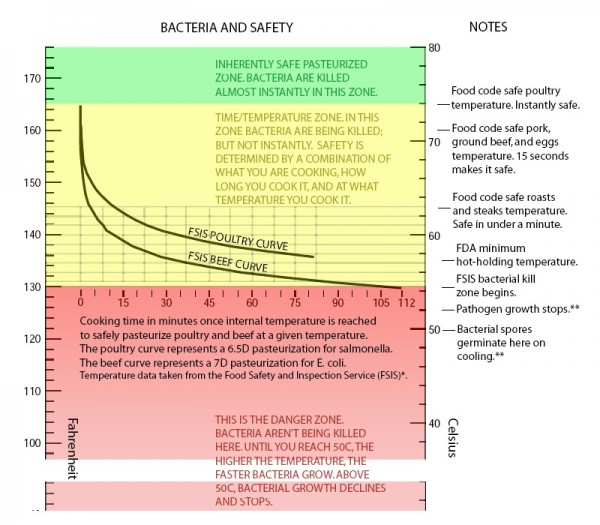
If you can raise the temperature of a container of water to 165 degrees, the water is safe from bacteria, viruses, and parasites. However, heat purification does not remove any contaminants, so you need to start with water that is clear and relatively clean.
If you are more ambitious, you can use a DIY solar oven to purify water by distillation. You don’t need to heat the water to the boiling point. The water vapor that results from heating the water can be piped into a cooling container for condensation. This type of purification removes most contaminants, except those that evaporate easily. It also removes pathogens, as long as the cooling container does not become contaminated by its physical connection to the heating container (the solar oven).
Here is an article from Mother Earth News on solar water distillation: Water Wiser Solar Stills
A solar oven can also be used to dry foods, for better storage. There are several different models of solar oven available for purchase from reputable companies. But I suggest that you might consider building your own solar oven. More on this topic in future posts.
- Thoreau

Like any other piece of equipment use it BEFORE shtf. There is a learning curve especially with the homemade ones. This is one of my main peeves about “preppers”, having abunch of new stuff they do not know how to use and thinking they can just use it on the day it happens
Good point, Matt. Prepping is not just about supplies, but also knowledge and experience.